
This policy is used to create a Token endpoint project to generate access tokens. The token endpoint API is used by the client to obtain an access token by presenting its authorization grant or refresh token along with valid credentials. In general, one instance of Token endpoint API project is sufficient for the entire API Management Product.
Configuration
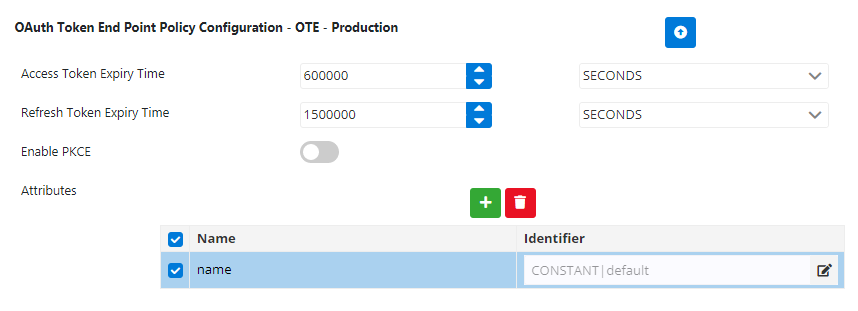
Figure 1: OAuth Token End Policy Configuration attributes
The property that has to be configured to use the policy is described below.
|
Property |
Description |
|
Access Token Expiry Time |
Provide required expiry time (select the unit of choice from the drop-down) to the generated access token. |
|
Refresh Token Expiry Time |
Provide required expiry time (select the unit of choice from the drop-down) to the generated refresh token. |
|
Enable PKCE |
Enable this to gain additional security using the technique Proof Key for Code Exchange. |
|
Attributes |
Custom attributes to be added in access token or authorization code. This will be embedded with the access token that can be extracted and checked during runtime. When custom attributes are added to an authorization code, these will be inherited by the access token generated from that code. Custom attribute will be displayed with access and refresh token in JSON format. |
Usage based on Grant Types
This policy is used with every authorization grant except for the implicit grant type where an access token is issued directly.
The Request for OAuth Token End Point has to be constructed with the following parameters using POST:
Authorization Code
To configure OAuth authorization using the Authorization Code grant type, refer to Step 2 in the Using Authorization Code section.
If the access token request is valid and authorized, the authorization server issues an access token and optional refresh token.
Resource Owner Password Credentials
To configure OAuth authorization using the Resource Owner Password Credentials grant type, refer to the Using Password section.
If the access token request is valid and authorized, the authorization server issues an access token.
Client Credentials
To configure OAuth authorization using the Client Credentials grant type, refer to the Using Client Credentials section.